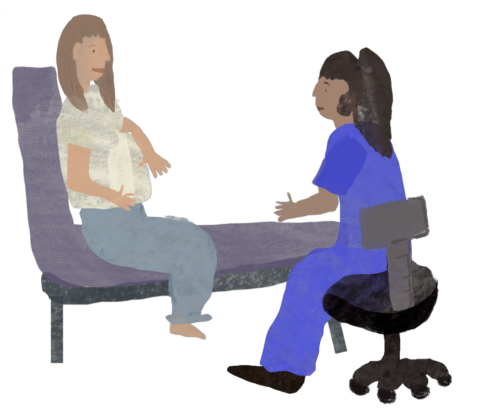
Pelvic health treatment, self assessment and referral
In this video the team explain self-assessment and how to self-refer into the service.
Why, when and what next?
Why?
If you suffer with symptoms related to pelvic health such as pain, bladder and bowel leakage or problems with sexual activity, it can feel private and sometimes difficult to discuss with your healthcare professional. It can also be difficult to know what is normal and what is not. We recommend you complete the self-assessment form to help.
When?
You are invited to complete this self-assessment early in pregnancy (before 18 weeks) and again after birth. We suggest completing it at 6-8 weeks, and again 4-6 months after you have birthed to screen for any issues that may have developed. You are welcome to complete the self-assessment any other time you have concerns with your pelvic health.
What next?
Once you have completed the self-assessment, if you recognise you do have pelvic health concerns and would like to self-refer to our service please click ‘submit’.
Is there a limit to accessing the service?
Women will be able to self-refer at any point throughout their pregnancy journey, or up to 12 months after their birth.
Please see separate tab ‘when should I contact my healthcare professional’
Please be aware, we are not an urgent care service. Contact your maternity unit, GP or 111 for a same day appointment if you are experiencing any of the following:
- urinary retention – sudden inability to pass urine, usually with some pain or discomfort in your bladder
- urinary tract infection – pain or a burning sensation when urinating, urine that looks cloudy, darker or stronger smelling than usual
- wound infection or breakdown – increase in pain, new bleeding or pus-like discharge, or feeling unwell
- loss of sensation – when passing urine and/or opening your bowels
Link for self-assessment and self-referral
You can complete the self-assessment and self-referral form by using this link or by scanning/clicking on the QR code below (for those pregnant or within 12 months postnatal).

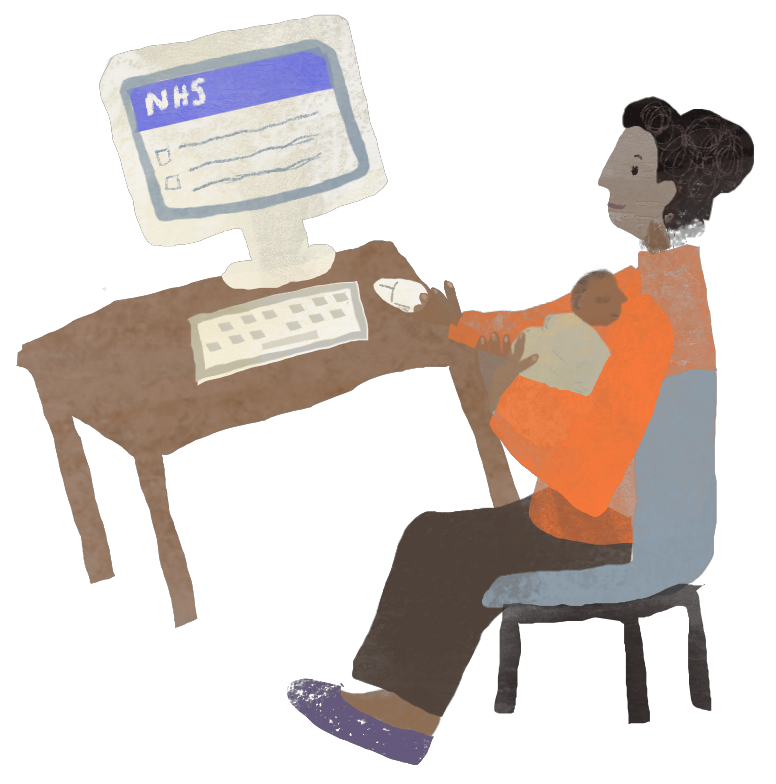
If you are not pregnant or over 12months you can still access physiotherapy support via your existing services:
- Royal Devon (North & East) – See your healthcare professional or GP for referral
- Torbay – Self-referral link
- Plymouth – Self-referral link
- Cornwall – Self-referral link
What to expect from your specialist pelvic health team
During a pelvic health Physiotherapy or Specialist Midwife appointment a detailed history will be taken about the problems you are experiencing. You will be asked about any past or current medical conditions, and medicines you take. It may be useful to bring an up to date list. Some of the questions asked may be of a personal nature, this is to establish a clear picture of the problem.
A key part of a Physiotherapy assessment is to offer an internal (vaginal) pelvic floor examination. This examination is optional, however it enables the physio or midwife to provide an individualised treatment programme and ensure you are able to squeeze your pelvic floor muscles correctly.
It will be explained what is recommended and you can ask questions or decline anything throughout the session. You will also be offered a chaperone for the examination and you can ask to stop the examination if at any point it becomes uncomfortable or distressing.
Pelvic health Physiotherapy treatments are usually based around exercise and advice that will be tailored to you following your assessment. They can also involve breathing techniques, relaxation, and manual therapy. Taking an active part in your treatment will help you achieve the best outcome and give you lifelong skills to maintain the health of your pelvic floor.
For further information about physiotherapy assessment please click on the following link which is also available in different languages.
Physiotherapy Assessment | POGP (thepogp.co.uk)