


Caring for my pelvic health following birth

If you have stitches, they will generally dissolve between 2 – 4 weeks after birth. More complex or severe tears will use stitches that take longer to dissolve. When you see your midwife, they will offer to examine your stitches and wound. This is the best way to spot early signs of infection.
(please click ‘When should I contact a healthcare professional’ for more information on infection).
Pain management and wound care
Translation playlists
It can be common to experience pain and discomfort following a vaginal or Caesarean birth.
Should you experience ongoing symptoms of discomfort or pain please speak to your GP or Midwife.
What can I do to help perineal healing?
What can I do to help perineal healing?
It is important to keep the area clean to reduce infection.
Wash only with water. Use a jug of warm water to pour over your vulva as you pass urine or lean right over your knees to prevent urine touching the wound.
After washing try not to rub the area with a towel, instead dab the area with a clean dry flannel.
Do not use shower gels, or any other creams or oils, on the wound.
Wash your hands both before and after going to the toilet or changing your pads. This will reduce the risk of infection.
Wash or shower at least once a day and change pads regularly. It is also advised that you do not share towels.
Dab yourself dry with a clean flannel, towel, or disposable kitchen roll. The use of toilet paper or cotton wool is not recommended as it will stick to your wound/stitches.
Leave your underwear off overnight, if possible, to allow some air to circulate.
Further information on perineal healing can be found on the POGP website.
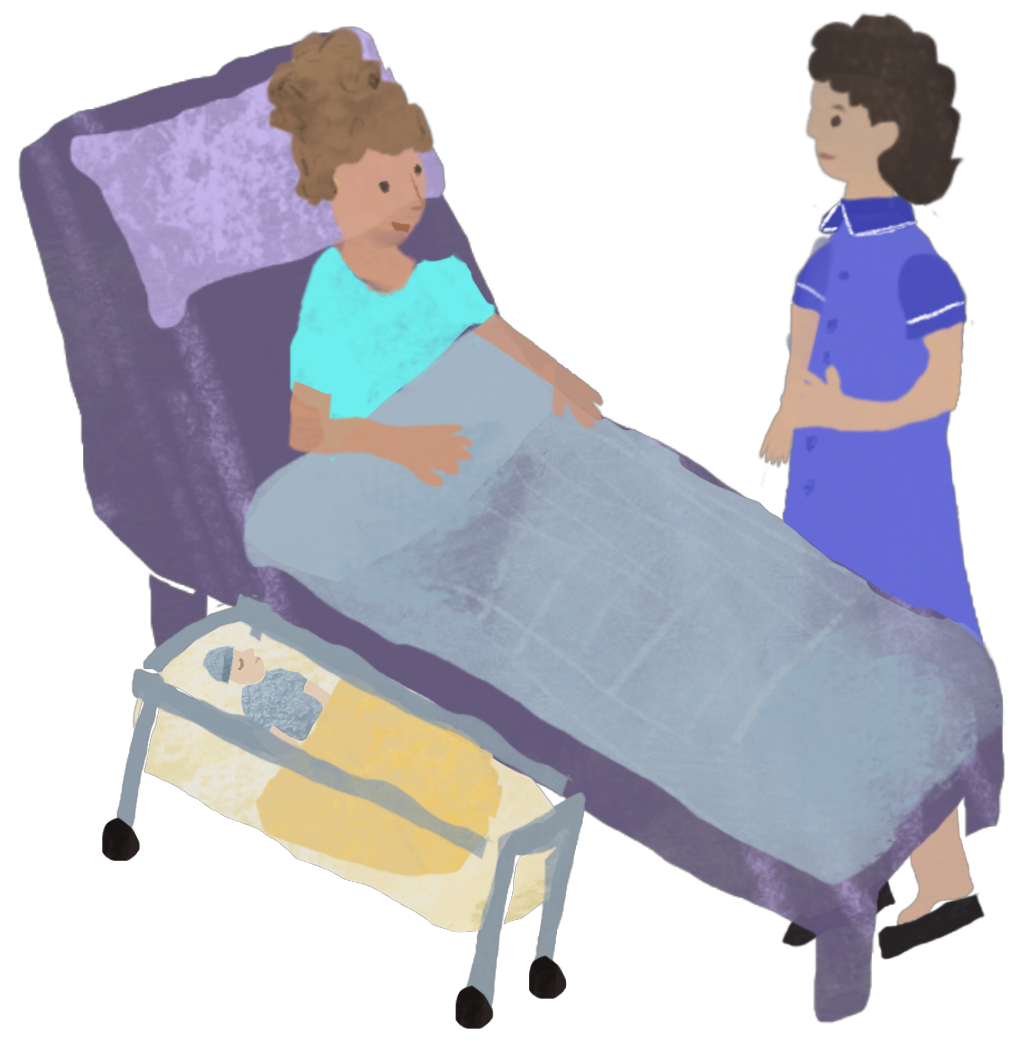
What is perineal wound breakdown?
After birth, you may have had stitches to repair any perineal tears, or an episiotomy.
Occasionally an infection or pressure on the stitches from bleeding underneath can cause the stitches to come apart (reopen), leaving an open wound. This is called perineal wound breakdown.
Wound reopening can cause an increase in pain, new bleeding, or pus-like discharge. You may also begin to feel unwell or have a high temperature if the infection is becoming more serious.
Sometimes you or your midwife may notice some stitch material coming away soon after you have had your baby or can see for themselves that the wound has opened.
What can be done if my perineal wound reopens?
If you are concerned there is a problem with your stitches, you should see your Midwife or Doctor straight away. They can offer to examine your stitches and look for signs of infection.
They may take a swab from the wound to try to find out what is causing the infection.
Most women will be given a short course of antibiotics if infection is suspected. Regular pain relief such as Paracetamol and Ibuprofen may help and is safe to take when breastfeeding. If you need more pain relief than this please don’t suffer at home, ask maternity triage or your GP to prescribe additional medication.
Here is further info on breastfeeding and pain relief.
 We recommend the use of Flaminal gel to support wound healing where wounds have reopened. This is applied twice daily with a clean finger and helps reduce pain and further infection in the short and longer term. Speak to your midwifery team to obtain this. Flaminal link for further information
Longer term follow up will be arranged with our specialist Midwives or you can self-refer on this site (once you have had your initial review with your team).
If the infection is making you seriously unwell, you may require admission to hospital for intravenous antibiotics. Your immune system is lower than usual when you have just given birth, so you are less able to fight off infection. Seek advice quickly if you think this is you. Please visit the sepsis website for further information if you think you have an infection.

Bladder and bowels
Your first bowel movement and avoiding constipation
Translation playlists
Having your first poo after birth can be nerve wracking and for some people this can be difficult, but there are lots of things you can do to make it a smooth process. Not stressing about it too much and resisting the urge to force it, will help you to make it past this milestone.
Your normal bowel habits should resume following the first few days after birth and it’s typical to have your first poo between 3- and 5- days following birth. However, some people may go on the same day they give birth, while others may take up to a week, so there is a wide range of normal.
How can you make your first poo easier?
It is important to eat well and drink plenty of water to help avoid constipation. Staying hydrated will help your bowels open regularly and avoid constipation, support breastfeeding and dilute your urine.
- Try to drink at least 2 litres of water every day to stay hydrated and so your urine is a pale straw colour. This will help you during pregnancy, to recover after birth, support breastfeeding and dilute your urine. Concentrated urine (darker in colour) may sting as it passes over the vulva and perineum.
- Eating a balanced diet (for instance fruit, vegetables, cereals, wholemeal bread and pasta) will help to keep your poo soft.
Stool softeners can reduce constipation also, especially if you are on medication that hardens your poo such as iron tablets following birth. Ask your Midwife or Doctor if you require a prescription for this.
Bowel movements can make you feel anxious when you have given birth and/or have perineal stitches. Unfortunately, constipation can increase in times of anxiety.
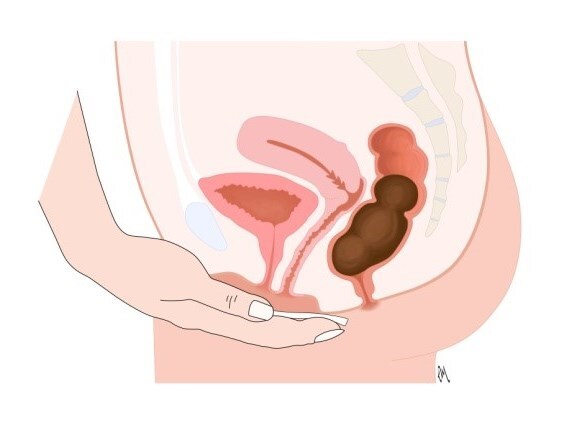
You may find it beneficial to use tissue and your hand to support your perineum while opening your bowels. You may find this relieves the pressure.
Avoid constipation by:
Drinking plenty of fluid. If breastfeeding your fluid requirement will increase, so take a bottle of water with you when you go out and put drinks out ready when you know you will be feeding your baby at home.
Eating regular meals and not skipping breakfast – this can get your bowels working.
Eating a healthy amount of soluble fibre (fruit and vegetables) and insoluble fibre (cereals and wholegrains). Aim for five portions of fruit and vegetables a day, and reduce processed foods and food with a high fat content where possible
Doing some form of gentle exercise every day.
Establish a regular bowel habit, for example, many people go to the toilet after a hot drink or breakfast each morning.
Asking your doctor for a gentle stool softener if you remain constipated or your haemorrhoids do not improve.
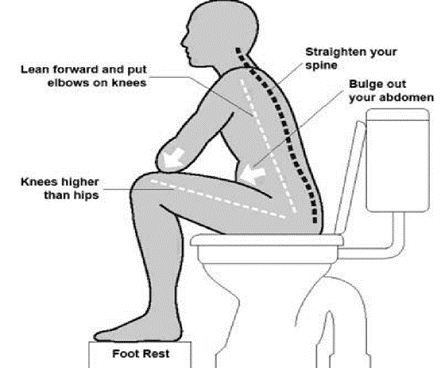
Not straining on the toilet excessively. Try to relax and rest your elbows on your knees. Bulge out your tummy by taking big abdominal breaths, this will help expel your poo without straining. Straining weakens your pelvic floor and anal sphincter muscles, and you should try to avoid this. Most importantly, take your time and do not rush.
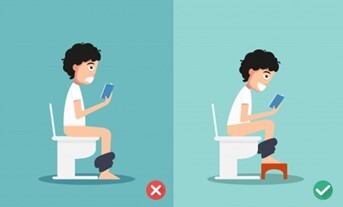
It can be helpful to put your feet on a footstool to raise your knees above your hips while sitting on the toilet (see image). This helps straighten out the bowels and relax the muscles around your back passage.
Visit the POGP website for further information.
Haemorrhoids (piles)
Haemorrhoids (piles) are swellings of blood vessels inside and around your anus (bottom), which are common around birth. The symptoms can be relieved with a suitable cream or suppositories available from your pharmacy. Haemorrhoids are treated by keeping bowel movements soft and avoiding constipation. If symptoms persist after using a cream from the pharmacy, talk to your GP surgery.
Bladder care – week one following birth
Translation playlists
Following birth, you are at risk of urinary retention. Should you experience any issues with feeling a full bladder or trouble emptying your bladder, please speak to your local maternity triage immediately.
Make sure you are emptying your bladder regularly (every 2 – 3hrs); this is particularly important throughout labour and following birth.
What is NOT normal?
- You don’t feel sensation of a full bladder or that you need a wee
- Every time you go for a wee, you pass only a small quantity (sometimes you don’t feel empty)
- You leak wee after you’ve been to the toilet
- You cannot hold wee at all (either leak small amounts without realising you needed to go or have a full bladder accident but unable to pass urine when you try)
If you have one or more of these symptoms of bladder retention, please contact your local maternity triage immediately if you have recently given birth. See section on ‘When to contact a healthcare professional?’.
Top bladder tips:
- Do not ‘stop and start’ the flow of urine.
- Do not get into the habit of going to the toilet ‘just in case’ as this increases your risk of developing an overactive bladder.
- Try not to force your wee out, instead breathing out slowly as you pass urine may help.
- Try to drink 2 litres of fluids per day to include water/squash.
- Get up and about.
- Go to the toilet as soon as you feel that you need to go. Don’t put it off!
- Ask your birth partner to look after your baby, so you’ll feel more relaxed.
- Avoid coffee, tea, green tea, energy drinks, hot chocolate.
- Avoid constipation.
- Take regular pain relief if needed.
Why is it so important to seek support?
Urinary retention can have a long-term impact on your life, so it is essential that you get in touch.
Don’t wait! and do ask for help.
You are likely to be invited in the hospital. They may offer you a bladder scan and a test of your urine. Sometimes, you need to wee by the clock 2-3hrly or occasionally a urinary catheter is needed for a few days. If this is the case, your healthcare team will make a precise follow-up plan with you.
Be aware: if you don’t feel the need to go to the toilet, but you can still have a wee, go to the toilet every 2-3 hours by the clock, and inform your midwife or your healthcare provider.
Why does it happen?
- There is a higher chance if:
- This is your first baby
- You had an epidural, or a spinal
- You had a long pushing phase
- You had a forceps birth, or a ventouse
- You had a tear, and stitches
- You have a urinary tract infection
- You’ve had it before, at any point in your life.
Further information
Care following assisted birth (Forceps and ventouse birth aftercare)
An instrumental or assisted birth is when your doctor or midwife uses a ventouse suction cup or forceps to help birth your baby.
A ventouse uses suction to attach a plastic cup onto your baby’s head.
Forceps are 2 metal spoon-shaped instruments that are carefully positioned around your baby’s head.
During an assisted birth, as the baby is being born, an episiotomy (cut) is sometimes needed to make the vaginal opening bigger. This can reduce the chance of a severe tear and make the birth of your baby easier. Any tear or cut is repaired with dissolvable stitches which do not need removing.
Urinary incontinence (leaking of wee) is common after giving birth, especially after an assisted birth. If you have had a forceps birth you will be offered physiotherapy to help prevent this happening, including advice on pelvic floor exercises. Urinary incontinence can happen because of bruising of the neck of the bladder during labour and delivery. Problems passing urine normally improve as the bruising goes down, and pelvic floor exercises help regain bladder control. If urinary incontinence doesn’t resolve, please refer to our service via the self-referral link.
Further information
The NHS and Royal College of Obstretricians and Gynaecologists (RCOG) has further information about assisted births.
healthtalk.org has videos and written interviews of women talking about their experiences of vaginal birth, including forceps and ventouse.
Care following a severe tear
A severe tear is a tear that extends into the back passage. These tears are also known as an obstetric anal sphincter injury (OASI) or a third- and fourth- degree tear.
- Everyone is different and recovery from a third- or fourth-degree tear will vary. You may experience pain or discomfort that can affect your mobility while you are recovering.
- There is additional support for women who feel that their mental health has been affected by their birth experience, or the effects of a tear. Talk to your healthcare professional about what is available.
- 6–8 in 10 women with a third- or fourth-degree tear will have no long-lasting complications after it has been repaired and given time to heal.
- A small number of women will experience difficulty in controlling their bowels or holding in wind. This is called anal incontinence. There is specialist treatment available for women with anal incontinence.
- If you have a severe tear, you will be offered to be seen by our team to aid your recovery and provide treatments for any complications.
The Royal College of Obstretricians and Gynaecologists (RCOG) has further information about severe tears.
The Masic Foundation supports mothers who have suffered from a severe tear or birth injury. Please see their website for support services they can offer.
The Birth Trauma Association (BTA) and Make Birth Better support women who suffer birth trauma – a shorthand term for post-traumatic stress disorder (PTSD) after birth.
Care following caesarean birth
A caesarean birth is a cut made on your abdomen (tummy) and womb and is repaired in different ways, either with dissolvable stitches or a removable stitch in the skin to come out around day 5.
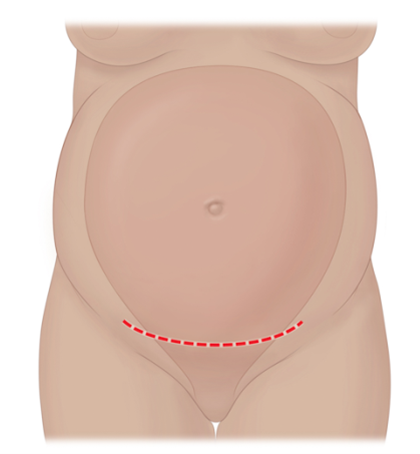
Your caesarean dressing will either be a standard dressing which remains for up to 5 days (unless it is soaked through) when your midwife will review the wound. Or a PICO dressing with linked battery pack (inflates and deflates), this will be used if your BMI is over 35, you have diabetes or are at higher risk of a wound infection. This is removed at 5 – 7days also.
Recovery from a caesarean birth usually takes longer than from a vaginal birth, but most women can go home 1 or 2 days after having it. You may experience some discomfort and you will be advised to take regular painkillers to help with this.
The first 6 weeks are when the initial healing takes place. The wound needs time to heal on the inside, even if it appears healed on the outside quite quickly. It may feel tender, itchy and numb in the first few weeks and can heal to be pink or red and slightly raised. Once healed, it should not be excessively painful or sensitive or prevent you from doing any of your everyday activities.
You may find some activities are more difficult, remember to listen to your body and stop if anything is painful.
- Avoid standing still for long periods (30 mins or more), particularly in the early days after your operation.
- Support the incision with your hand or a towel when you cough, sneeze or laugh.
- When getting out of bed roll onto your side first then push up with your arms. You should then do this in reverse when getting back into bed POGP booklet to support your early recovery.
- Avoid heavy lifting –anything heavy is advised against e.g. pushing or carrying a bag of groceries.
- Daily walking is advised as this improves blood flow and promotes healing. Starting with short distances and building up gradually.
- Driving after a caesarean birth depends on feeling well enough and your car insurance covering you. Most suggest waiting 6 weeks and waiting until you are feeling well enough to drive (it is your legal obligation to check you are insured before you start driving again).
Here you find some useful information about care following a caesarean birth, and the information provided in our Trusts.

Remaining active and returning to exercise following pregnancy
Translation playlists
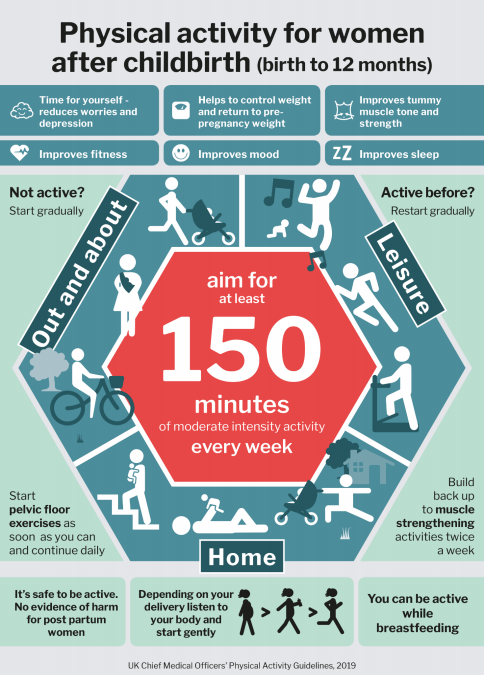
There are many health benefits of exercise. Everyone’s fitness levels are different so continue to move and exercise during pregnancy and return gradually after giving birth.
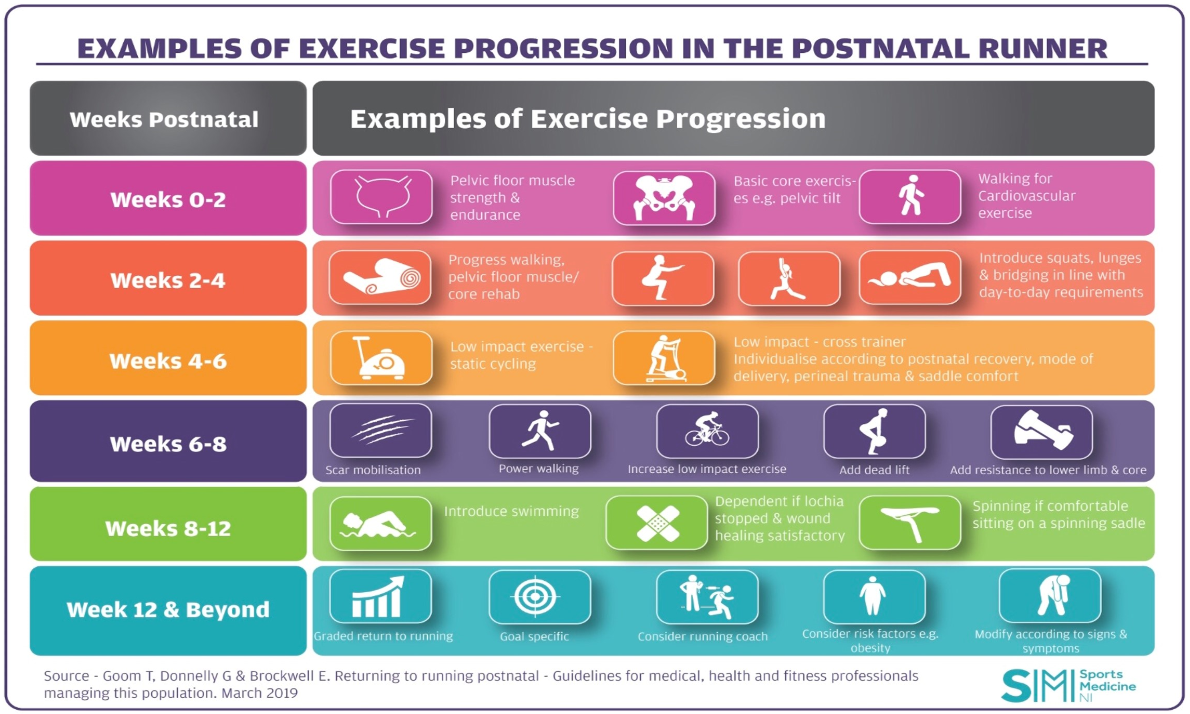
Ligaments will be softer during pregnancy and for up to five months after birth, so take care not to start high impact exercise like running or jogging too soon following birth. Return to exercise at your own pace. After pregnancy, avoid high impact exercise and heavy lifting for 4 – 6weeks, and gradually increase from 4 – 6 weeks.
Walking is an excellent form of exercise. If you are walking with a pram, ensure your pram handles are at a height that enables you to maintain a good posture.
We recommend waiting to go swimming until after you have had seven consecutive days clear of any vaginal bleeding. If you have had a caesarean birth, it is recommended you wait until after your 6 – 8week GP review.
- More information is available on the Exercise and advice after pregnancy leaflet here.
- Read more on the Fit for Future leaflet here.
- Return to running guidelines can be found here
After birth – your stomach muscles
Advice and exercise after baby loss
We are sorry you have lost your baby. We understand how devastating it is when a baby dies, that each person will grieve differently, and that there is no right or wrong way.
There are different types of support, and your needs can change over time. Some people may want to talk, some may find it comforting to read about others’ experiences, some find it helpful to start doing some form of exercise, starting with a little and building it up slowly over time.
Both your physical and emotional recovery after the loss of your baby will take time. When you’re ready, this information booklet will guide you on your early recovery after birth.
Returning to sex and contraception after birth
How soon after birth can you resume sex?
Everyone is different and there is no ‘right’ or ‘wrong’ time to begin. This decision should be based on when you feel ready both physically and mentally.
Your wound may take days, weeks or months to heal so restart sexual activity slowly and when it feels right for you.
Sexual activity may mean not having full penetrative sex for a while, you may fear discomfort, or your partner may be afraid of hurting you. However, it is ok to try if you wish to.
A natural paraben free lubricant can be helpful (if you are using condoms, you should use a water-soluble gel). These are readily available online. Sometimes, women who have recently had a baby may notice the vagina is drier than usual, particularly if they are breastfeeding.
If you have an intact perineum, grazes or did not require stitches, your perineum may still need time to heal and will remain bruised and sensitive to touch for some time following the birth.
Perineal massage to the scar, either on your own or with your partner, may help you feel more comfortable before you begin sexual activity again.
Sex may be uncomfortable and feel different at first, but the discomfort should not persist.
The appearance of your vulva may look different to before you gave birth. This is a natural normal change. If you have any concerns or questions, your GP or Midwife can offer a physical examination.
Talking with your partner about sexual activity and any anxieties either of you may have, and choosing a time when you both feel relaxed can help.
There are no rules about when to start having sex again after you have given birth.
All of us are different so do not compare yourself with others if you are finding it is taking longer to return to your previous sex life. However, there should be no long-term discomfort associated with sexual intercourse following childbirth.
Please fill in the self-referral if you have tried to have sex but you feel it is not the same as before, or you are experiencing some new and/or unpleasant symptoms
Contraception
It is possible to become pregnant again very soon after the birth of a baby, even if you are breastfeeding and even if your periods have not returned. You usually release an egg (ovulate) about two weeks before your period starts, so it is possible to get pregnant before you have a period.
- Devon Sexual Health – provides plenty of information on all aspects of your sexual health
- Brook – this toolkit gives information on different contraception following birth
- The NHS website has further information about sex and contraception following birth.