UTIs in over 65s – Know the signs and help prevent infection
Urinary tract infections (UTIs) are common, but older adults can be at greater risk of complications. Knowing the signs, taking steps to prevent infection and getting the right advice when needed can help keep you well.
UTIs affect the urinary system, including the bladder, urethra and kidneys. While many UTIs can be treated effectively, an infection can sometimes become more serious if left untreated and may lead to sepsis, requiring hospital treatment.
People aged 65 and over can be at greater risk of complications, so it is important to know what to look out for and where to get help if you think you may have a UTI.
How can you help prevent a UTI?
There are several simple things you can do to help reduce your risk of developing a UTI.
💧 Stay hydrated
Drinking enough fluids helps keep you hydrated and can help your urinary system work properly. The NHS Eatwell Guide recommends aiming for 6 to 8 cups or glasses of fluid a day.
Water, lower-fat milk, sugar-free drinks, tea and coffee, all count towards your daily fluid intake.
If you have been advised to limit the amount you drink because of another health condition, speak to your healthcare professional about how much fluid is right for you.
🚽 Don’t hold on
Try to go to the toilet when you need to rather than holding in your urine for long periods.
If you find it difficult to get to the toilet, or are experiencing problems with incontinence, speak to your GP or nurse. They may be able to refer you to a continence service for further support.
🧼 Keep clean and dry
Good personal hygiene can also help reduce the risk of infection. Where possible:
- Keep the area around your genitals clean and dry.
- Change incontinence pads regularly.
- Avoid using heavily scented soaps or products around the genital area.
- When using the toilet, wipe from front to back.
If you are sexually active, washing the skin around the genital area with water before and after sex and going to the toilet as soon as possible afterwards may also help reduce the risk of a UTI.
Know the signs of a UTI
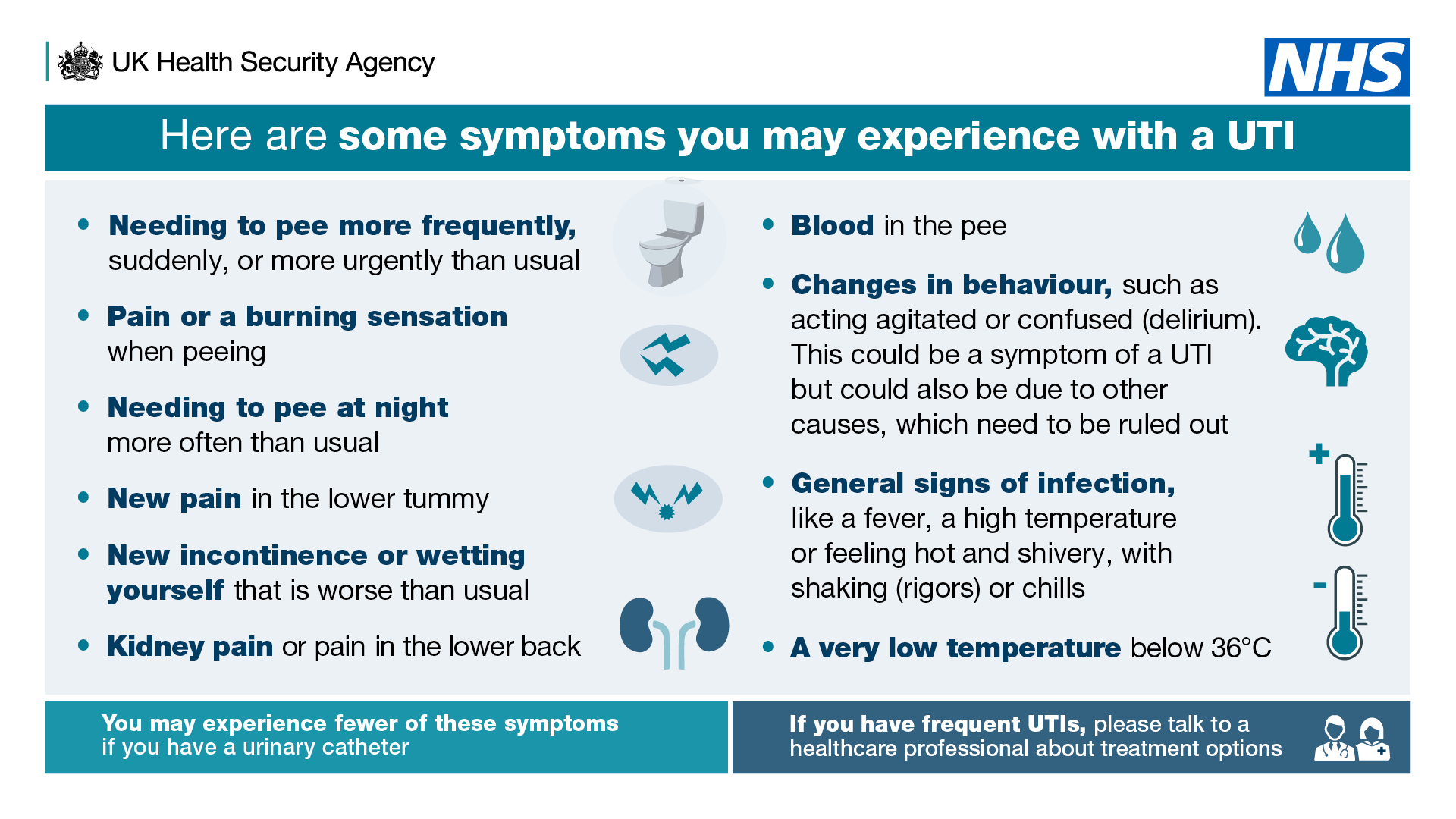
Symptoms can vary from person to person. They can include:
- Needing to pee more often, suddenly or more urgently than usual.
- A burning or painful sensation when peeing.
- Needing to pee more often during the night.
- New pain in your lower tummy.
- New or increased incontinence.
- Pain in your lower back or around your kidneys.
- Blood in your urine.
- A high temperature, feeling hot and shivery, or chills.
- A very low temperature, below 36°C.
Changes in behaviour or confusion
In older adults, a UTI can sometimes be associated with a sudden change in behaviour or new confusion (delirium).
However, confusion can have many possible causes and should not automatically be assumed to be a UTI. A healthcare professional should assess the situation and consider other possible causes.
What should you do if you think you have a UTI?
If you think you may have a UTI, seek advice from a healthcare professional. This could be your:
- GP
- Nurse
- Community pharmacist
- Walk-in or urgent treatment centre
- NHS 111
They can assess your symptoms and advise you about the most appropriate treatment.
If you experience repeated UTIs, speak to your healthcare professional. There may be treatments or other measures that can help reduce the chance of further infections.
While waiting for advice or treatment, make sure you drink enough fluids to avoid becoming dehydrated, unless you have been advised to restrict your fluid intake.
If you are experiencing pain, paracetamol may help but always follow the instructions on the packet or advice from your healthcare professional.
Take antibiotics exactly as prescribed
Different bacteria can cause UTIs, and different antibiotics may be needed to treat them.
Never take antibiotics that have not been prescribed for you or use leftover antibiotics from a previous infection.
If you are prescribed antibiotics, take them exactly as instructed by your healthcare professional and on the label.
If you have any questions about your treatment, speak to your GP, nurse or pharmacist.
Find out more
For more information about UTIs, including symptoms, treatment and when to seek help, visit the NHS website.
If you are worried about your symptoms, don’t wait for them to become worse. Speak to a healthcare professional for advice.