


People with long-term conditions urged to take extra care during hot weather in Devon and Cornwall

Health leaders across Devon and Cornwall are asking people to take a bit of extra care during the current hot spell, especially those living with long-term health conditions.
A Heat-Health Alert has been issued for the next five days by the UK Health Security Agency (UKHSA) and the Met Office, highlighting the risks that higher temperatures can bring to people’s health.
Hot weather can put extra pressure on the body. It can lead to dehydration, overheating, and make existing health issues worse. People with conditions like heart or lung disease, diabetes, kidney problems or mental health conditions may be more affected.
Some medications and having more than one condition can also make it harder for the body to stay cool and properly hydrated.
Here are some simple steps to stay well:
- Try to stay out of the heat, particularly between 11am and 3pm
- Drink plenty of fluids regularly
- Keep your home cool by closing blinds or curtains during the day
- Avoid strenuous activity in the hottest part of the day
- Check in on friends, family and neighbours, especially older people or those living alone
- Store medicines correctly and take them as prescribed
If you’re living with a long-term condition, it’s especially important to:
- Keep an eye on your symptoms and seek advice if they get worse
- Make sure you have enough medication and understand how heat might affect it
- Stay cool and hydrated to reduce strain on your body
People with heart, lung or kidney conditions may be particularly vulnerable to dehydration and heat-related illness. Those with diabetes should monitor their blood glucose levels carefully, as hot weather can affect blood sugar control and insulin storage.
People living with dementia may be less aware of the effects of heat or forget to drink enough fluids, so carers and family members are encouraged to provide regular support and reminders.
You can contact NHS 111 for urgent advice, or 999 in an emergency.
Some people are more vulnerable in hot weather, including:
- People aged 65 and over
- Babies and young children
- People with long-term health conditions
- Those on multiple medications or living alone
Dr Chris Reid, Chief Transformation and Place Officer at NHS Cornwall and Isles of Scilly said: “While many people enjoy the warmer weather, it can be more challenging for those with underlying health conditions. We’re asking everyone to take a few simple steps to stay well and to check in on those who might need a little extra support during this time.”
For more advice on staying safe in hot weather, visit:
www.nhs.uk/live-well/seasonal-health/heatwave-how-to-cope-in-hot-weather/

Additional advice for people living with long-term health conditions
Hot weather can affect people differently depending on their health condition and the medicines they take. The NHS is encouraging anyone with a long-term condition to be aware of how heat may affect their health and to plan ahead during periods of very hot weather.
Heart conditions
Hot weather causes blood vessels to widen, making the heart work harder to maintain blood pressure. People living with heart failure, coronary heart disease or other cardiovascular conditions may find symptoms become worse during extreme heat.

Patients should:
• Stay well hydrated unless they have been advised to restrict fluids.
• Avoid strenuous activity during the hottest parts of the day.
• Seek medical advice if they experience worsening breathlessness, dizziness, swelling or chest discomfort.
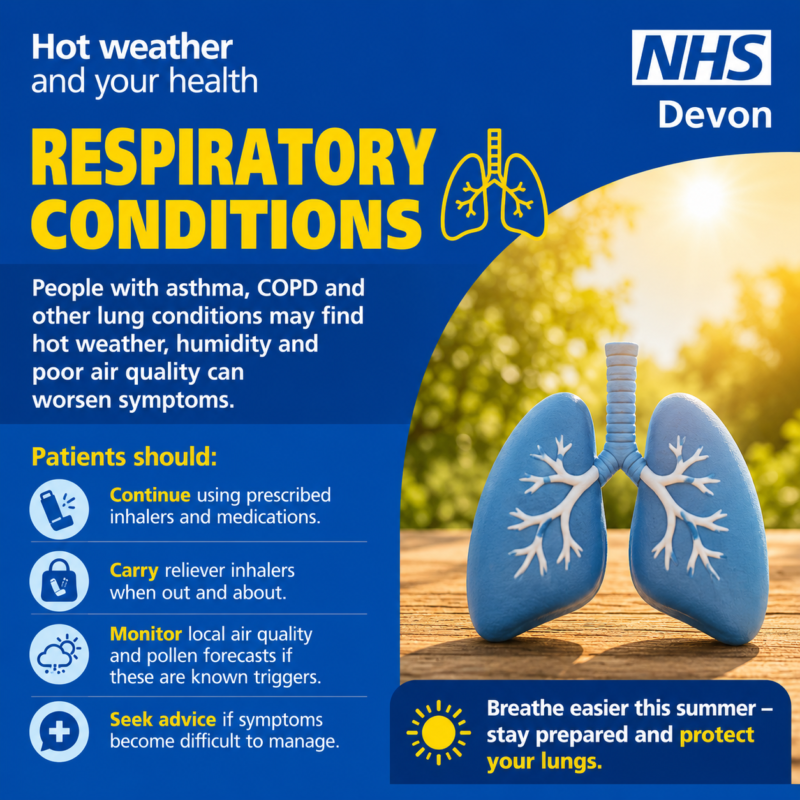
Respiratory conditions
People with asthma, COPD and other lung conditions may find hot weather, humidity and poor air quality can worsen symptoms.
Patients should:
• Continue using prescribed inhalers and medications.
• Carry reliever inhalers when out and about.
• Monitor local air quality and pollen forecasts if these are known triggers.
• Seek advice if symptoms become difficult to manage.
Diabetes
Heat can affect blood glucose levels and increase the risk of dehydration. Some diabetes medications and insulin may also be affected by high temperatures.
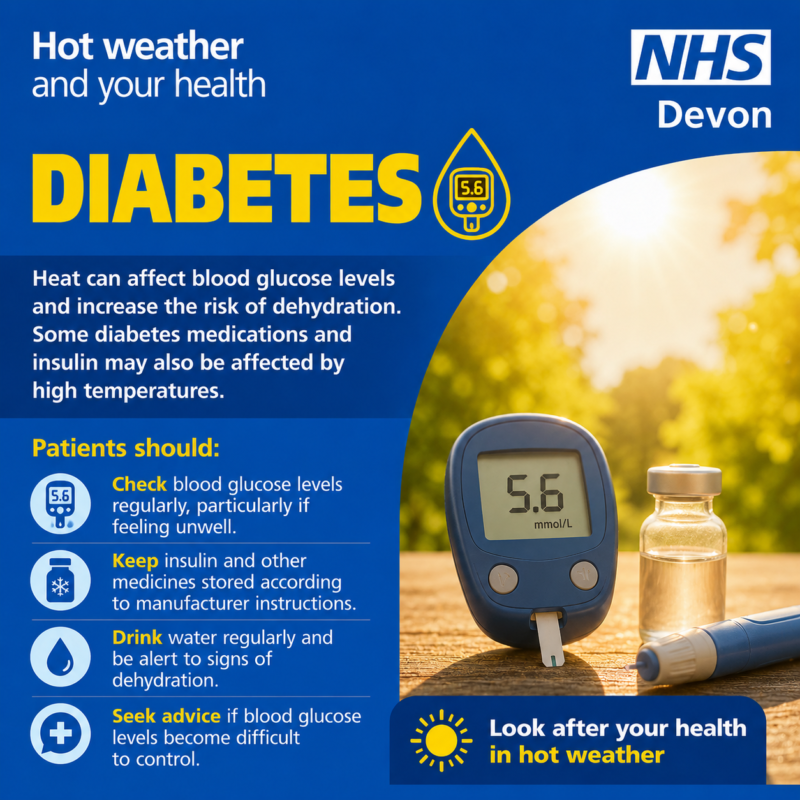
Patients should:
• Check blood glucose levels regularly, particularly if feeling unwell.
• Keep insulin and other medicines stored
• Drink water regularly and be alert to signs of dehydration.
• Seek advice if blood glucose levels become difficult to control.
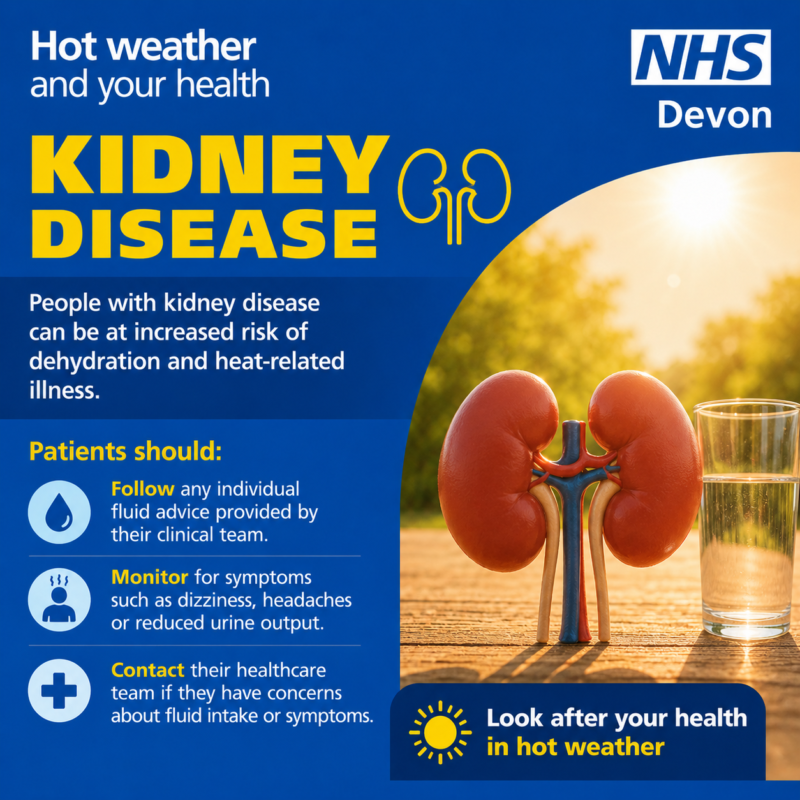
Kidney disease
People with kidney disease can be at increased risk of dehydration and heat-related illness.
Patients should:
• Follow any individual fluid advice provided by their clinical team.
• Monitor for symptoms such as dizziness, headaches or reduced urine output.
• Contact their healthcare team if they have concerns about fluid intake or symptoms.
Dementia and cognitive impairment
People living with dementia may be less likely to recognise when they are becoming too hot or dehydrated.

Families, carers and support workers should:
• Offer regular drinks throughout the day.
• Ensure living spaces remain as cool as possible.
• Encourage the use of lightweight clothing.
• Check regularly for signs of dehydration or heat exhaustion.
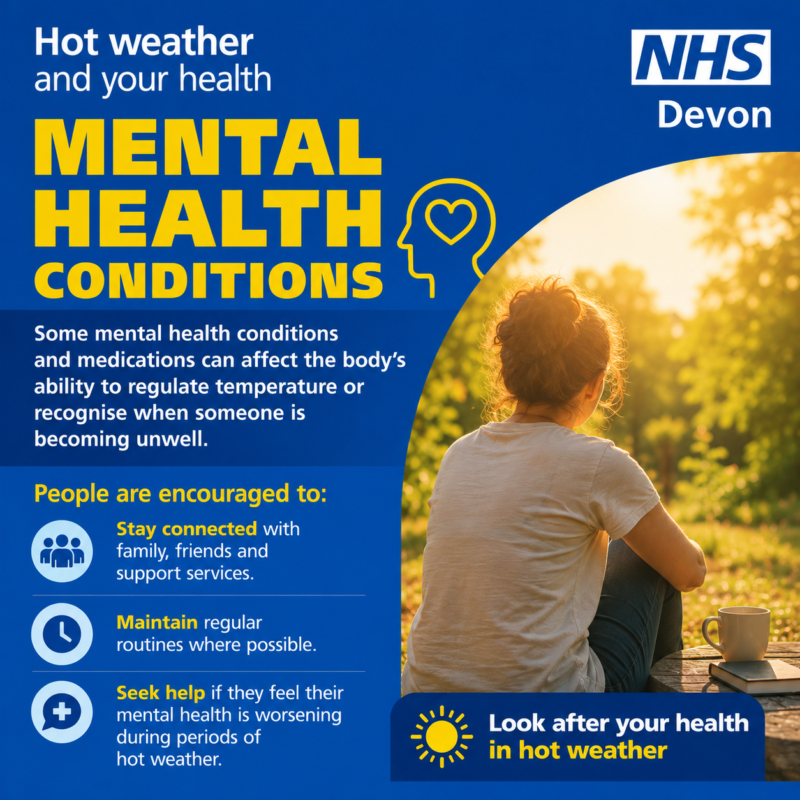
Mental health conditions
Some mental health conditions and medications can affect the body’s ability to regulate temperature or recognise when someone is becoming unwell.
Patients should:
• Stay connected with family, friends and support services.
• Maintain regular routines where possible.
• Seek help if they feel their mental health is worsening during periods of hot weather.
Planning ahead
People with long-term conditions are encouraged to prepare for hot weather by:
- Keeping enough medication supplies at home.
- Ensuring they have access to drinking water.
- Identifying the coolest room in their home.
- Arranging regular check-ins with family, friends or carers if they live alone.
- Knowing who to contact if their symptoms worsen.
The post People with long-term conditions urged to take extra care during hot weather in Devon and Cornwall appeared first on One Devon.